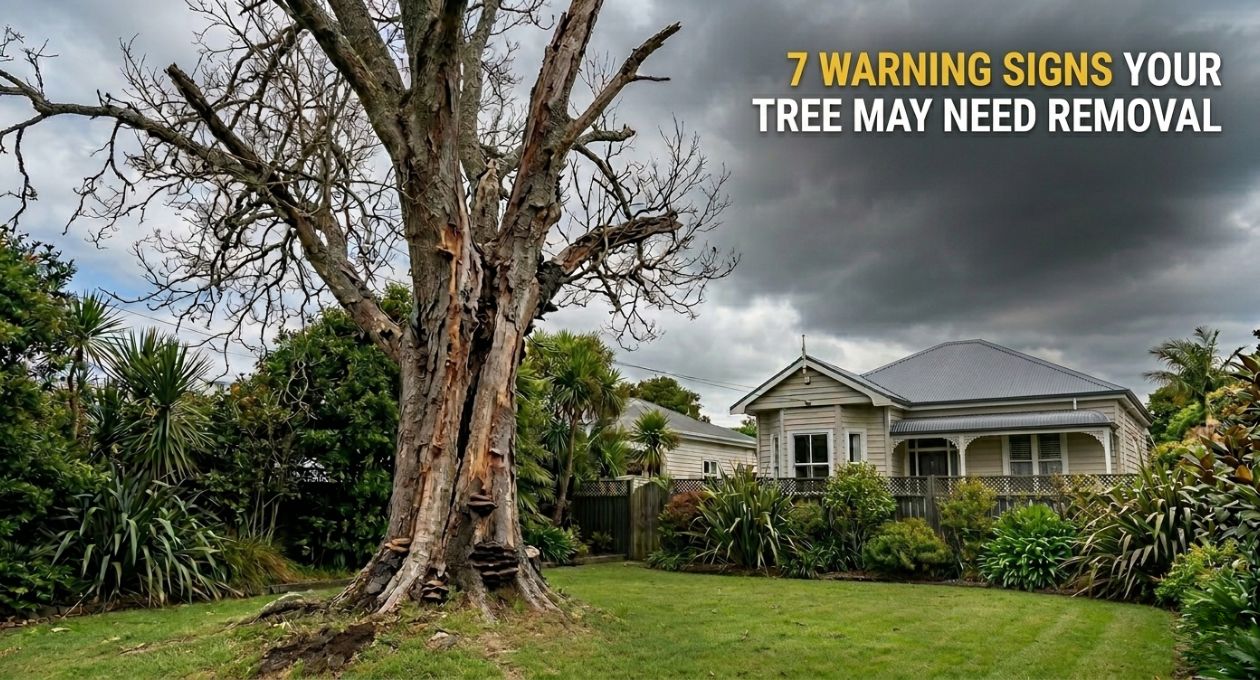
Apparently, there’s something off about your tree but you can’t tell if it’s that serious.
So you wait. Weeks turn into months. Until one night, the thunderstorm hits and the entire tree comes crashing down. The THUD of falling jolts you awake.
The next day, your once beautiful garden looks like a crime scene. Your driveway is blocked, the neighbors are clamouring, and you’ve no idea what to do.
Unless you want any of this to happen, tree removal doesn’t sound like a bad option at all.
Free, no-obligation
Need Professional Tree Removal?
We assess the tree on site, quote in writing, and take care of consent checks before anything is cut.
Yes, a tree is a great addition to your garden, but unchecked overgrowth, disease, or an unreliable structure make it a standing liability on your property, requiring proper removal. In this blog, we’ll be breaking down the top 7 signs that your tree is not oak-kay.
The 7 Signs of Your Tree Becoming a Menace
It isn’t difficult to tell when your tree is a lost cause and it’s best to get it off your property. Heavy branches, trunk leaning too close, or a nasty infestation can make it eligible for removal. Even after removal, the area can be reserved for future landscaping or replanting.
Here’s how you can check whether your tree needs to be removed or just trimmed:
SIGN #1 The Tree is Dead or Dying
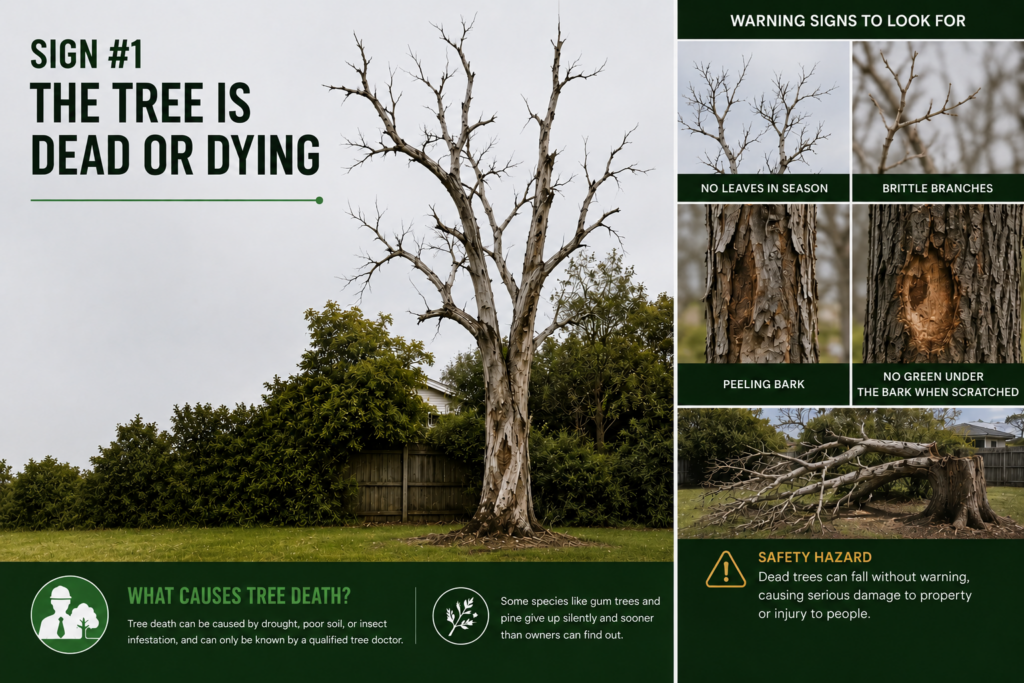
Now, this one gives away all the reasons why a tree isn’t serving your garden. A tree is usually considered dead or on the verge of dying with no leaves growing in season, brittle branches, peeling bark, or no green under the bark when scratched.
You may think a dead tree wouldn’t cause any harm, but if left for too long, it can be a safety hazard. Dead or dying trees don’t have the structural integrity to retain their build and can be unpredictable, especially during windy winters and thunderstorms.
It’s also not possible to recover dead trees, leaving you with the option of removing them entirely. Tree death can be caused by drought, poor soil, or insect infestation, and can only be known by a qualified tree doctor. Some species like gum trees and pine give up silently and sooner than owners can find out.
SIGN #2 Significant Trunk Damage or Decay
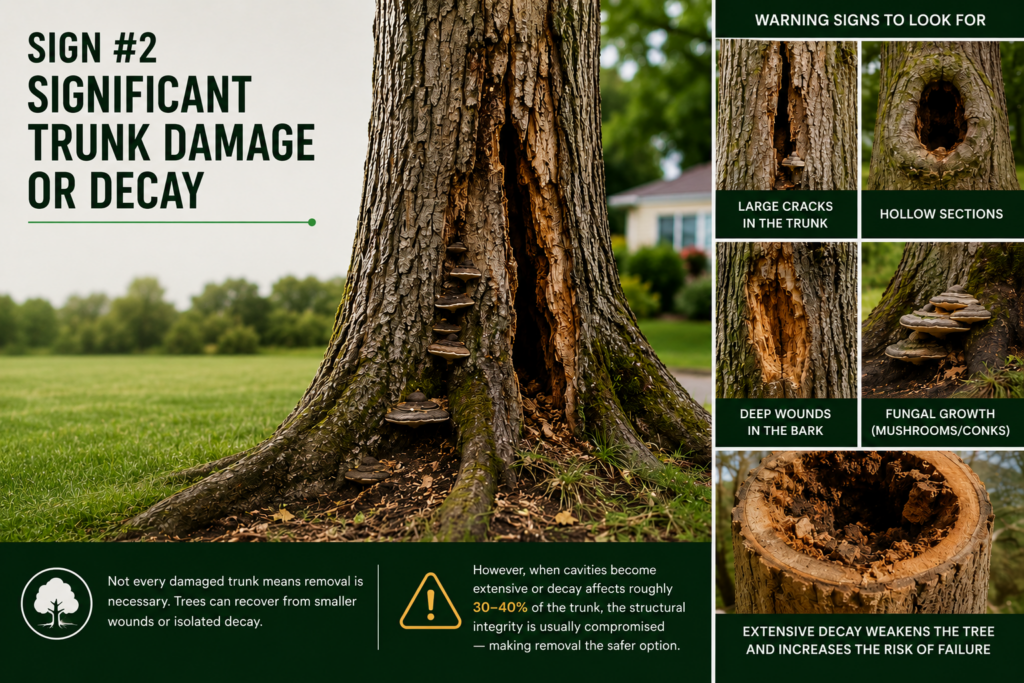
A tree’s strength lies in its core — the trunk. When the trunk starts showing signs of damage or decay, the entire structure starts to lose stability. Some warning signs include large cracks running through the trunk, hollow sections, deep wounds in the bark, or fungal growth such as mushrooms and conks forming around the base. These often point towards any form of internal decay that may not be fully visible from the outside.
But not every damaged trunk automatically means the tree needs to be removed. Sometimes, trees can recover from smaller wounds or isolated decay. However, when cavities become extensive or decay affects roughly 30–40% of the trunk, the structural integrity of the tree is usually compromised enough to make removal the safer option.
Pro Tip: If a crack or cavity in the trunk is large enough to fit your fist into, it’s time to call an arborist for an inspection.
SIGN #3 Leaning at an Unusual Angle
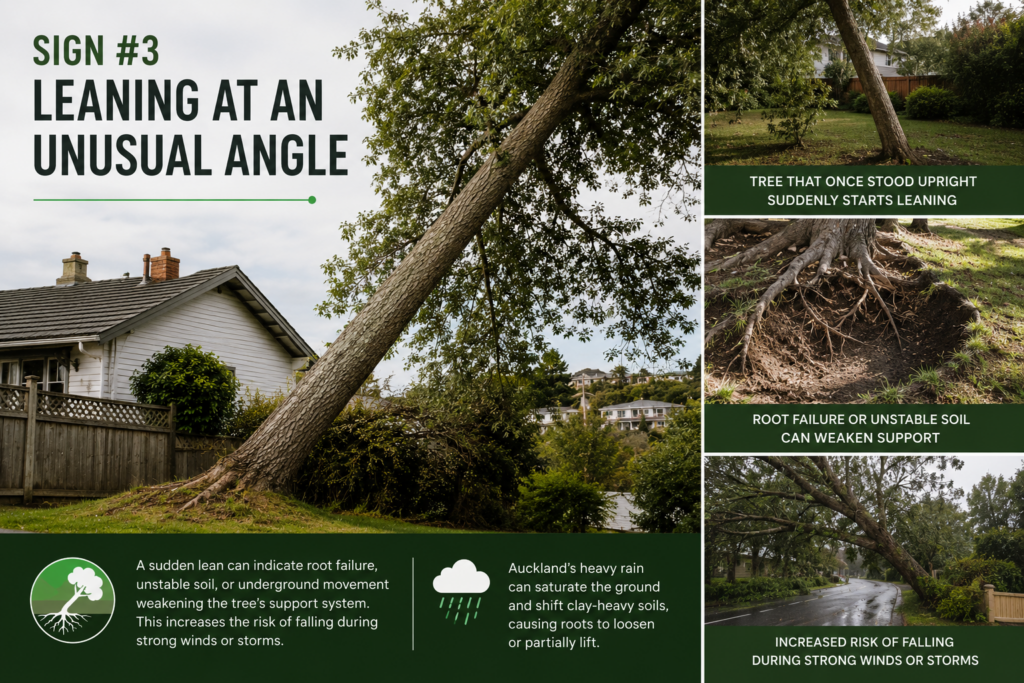
Some trees naturally grow at an angle over time and continue to stay perfectly stable for decades. But when a tree that once stood upright suddenly starts leaning or the angle noticeably worsens within a short period, it can become concerning.
A sudden lean can mean root failure, unstable soil, or underground movement weakening the tree’s support system. With Auckland’s heavy rain, the excess water can saturate the ground and shift clay-heavy soils, causing roots to loosen or partially lift from the earth. Once that stability is compromised, the risk of the tree falling increases significantly during strong winds or storms.
A leaning tree often starts to become a hazard for fences, parked cars, neighbouring properties, roofs, and power lines. If you happen to notice exposed roots, cracked soil around the base, or a lean that seems to be worsening, it’s best to get a professional opinion before it collapses.
SIGN #4 Root Damage or Root Zone Problems
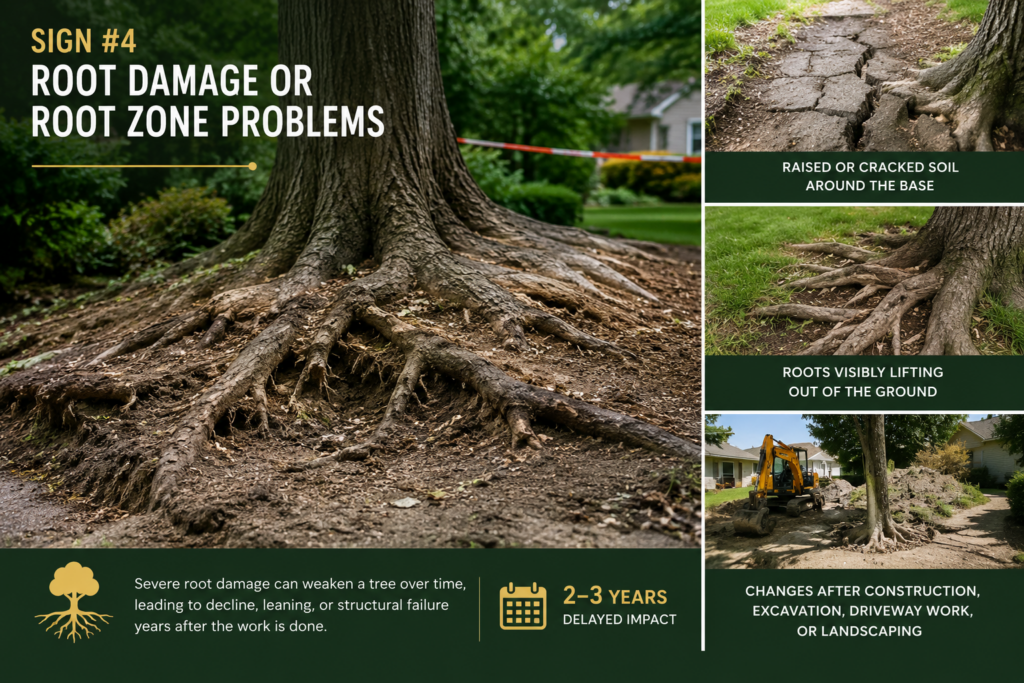
Most tree problems start from underneath. Since the roots are a tree’s anchor system, when they become damaged, weakened, or disturbed, the tree can become unstable.
In case of severe root damage, you might notice raised or cracked soil around the base, roots visibly lifting out of the ground, or sudden changes after nearby construction, excavation, driveway work, or landscaping. Sometimes, cutting major surface roots during building or paving projects can slowly weaken a tree over the next two to three years, eventually leading to decline, leaning, or structural failure long after the work is finished.
This is why seemingly healthy trees can suddenly become hazardous without much warning. If significant work has been carried out near a tree in recent years, it is a good idea to have the tree inspected before the problem gets worse.
SIGN #5 The Tree is Too Close to a Structure
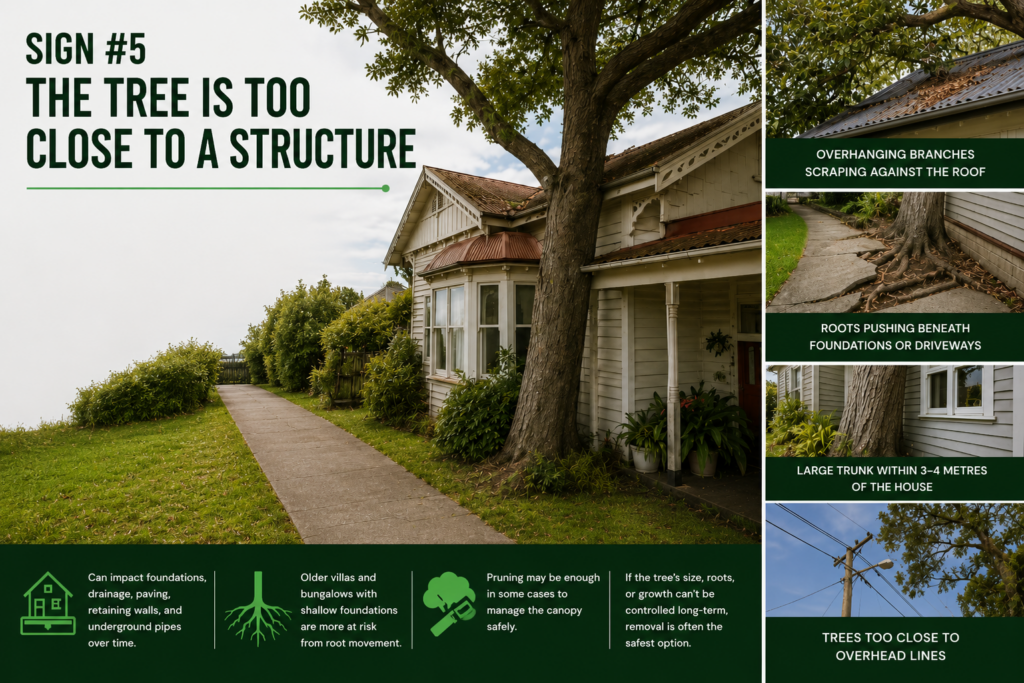
Tree growth interfering with other structures can look like this; overhanging branches scraping against the roof, roots pushing beneath foundations or driveways, or a large trunk sitting within three to four metres of the house can all create long-term structural and safety risks.
This is pretty common around older villas and bungalows in Auckland, many of which were built with shallower foundations that are more vulnerable to root movement and shifting soil. Large trees growing too close to buildings can gradually affect drainage, paving, retaining walls, and underground pipes over time.
Plus, trees growing too close to overhead lines can quickly become both a legal and safety issue, particularly during storms or high winds. In some situations, tree pruning is enough to manage the canopy safely. But if the tree’s roots, size, or ongoing growth cannot realistically be controlled long-term, removal often becomes the safer and more practical solution.
SIGN #6 Heavy Storm Damage
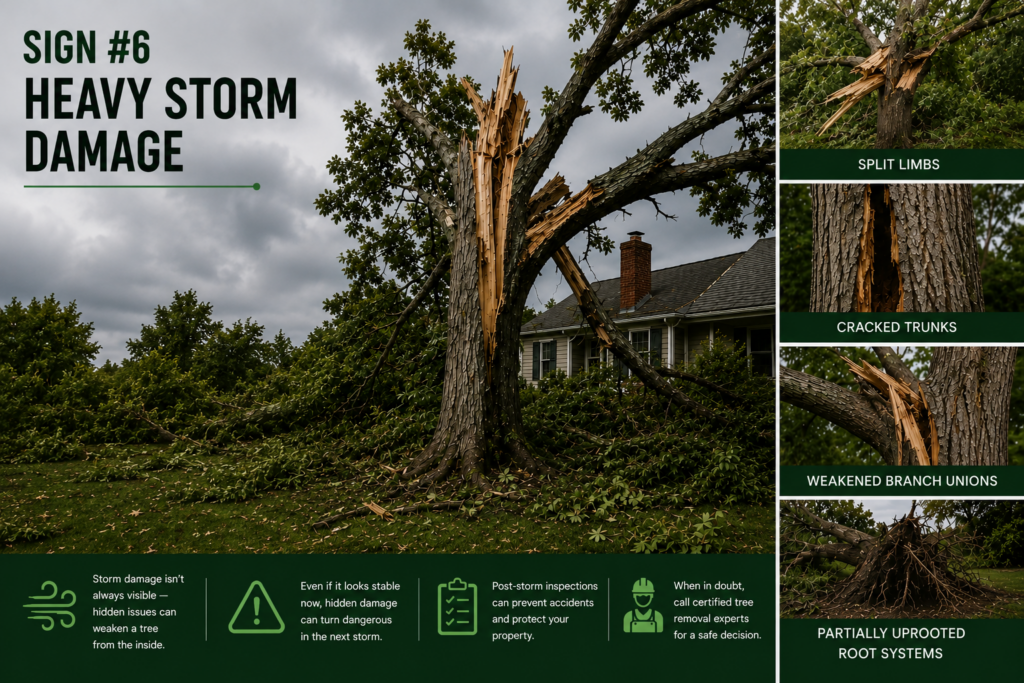
Strong winds and heavy rain can leave trees with split limbs, cracked trunks, weakened branch unions, or partially uprooted root systems.
While the damage isn’t visible outside, the bad news is that a storm-damaged tree rarely regains its original structural strength completely. Even if the canopy still looks mostly intact, there may be internal fractures or root instability quietly compromising the tree behind the surface. That hidden damage can turn into a serious hazard during the very next period of strong wind or bad weather.
Post-storm inspections can make a great difference in avoiding the next catastrophe. If you notice hanging branches, fresh cracks, leaning, or debris around the base, consider calling certified tree removal experts for help.
Note: In case a tree does fall off or is at risk of falling, we offer 24/7 emergency storm response across Auckland,
SIGN #7 Persistent Pest or Disease Infestation
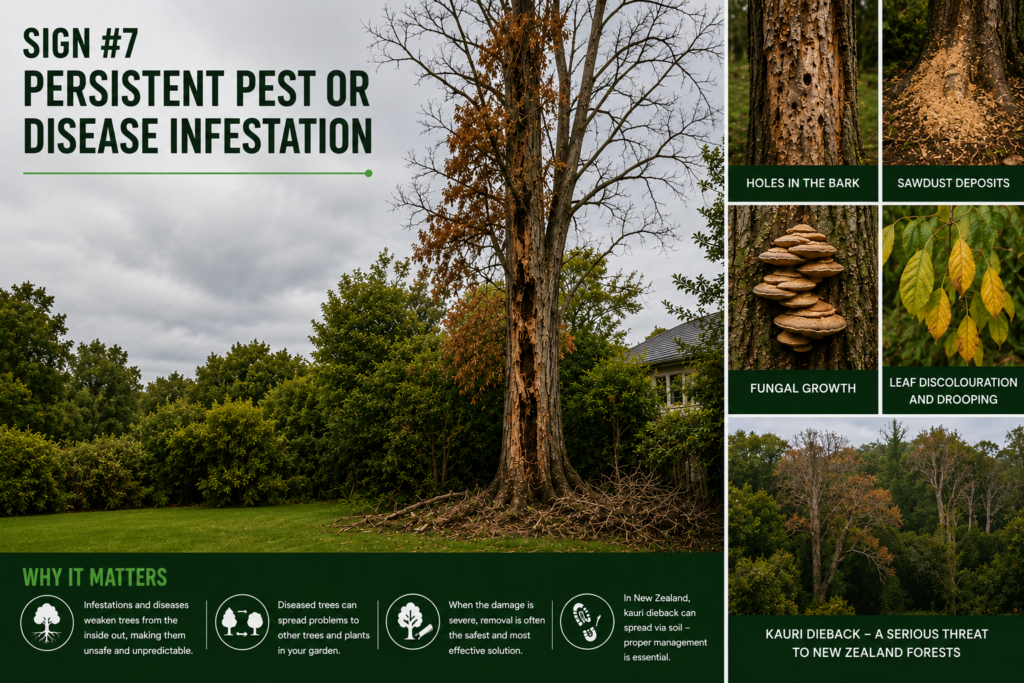
Usually, the decline starts with warning signs, which can be noted well before the situation becomes irreversible. These signs include holes appearing on the bark surface, sawdust deposits near the bottom of the trunk, visible presence of fungi, or leaf discolouration and drooping despite adequate watering.
Some types of infestations can get to a point that is impossible to recover without compromising tree stability or its overall condition. Even if only part of the tree is alive, it might deteriorate internally, regardless of its appearance.
The problem does not stop there, as sick trees might cause more damage to other trees or even plants by spreading the infection or pests throughout the garden. Hence, tree removal becomes unavoidable in cases like these.
Finally, in New Zealand, the issue of kauri dieback has become crucial. The reason is that the contaminated soil can transfer pathogenic bacteria between the sites. For that reason, proper tree management is critical.
Free, no-obligation
Need Professional Tree Removal?
We assess the tree on site, quote in writing, and take care of consent checks before anything is cut.
What to Do When You Spot These Signs
Sometimes, taking things into our own hands isn’t the right way to go about it. And when a tree is standing in your garden waiting to be removed, the best approach is to always call a professional.
Also, attempting a DIY removal can lead to an action by the Auckland Council, which states stipulated rules about tree removal and makes it illegal to cut trees near powerlines without a license.
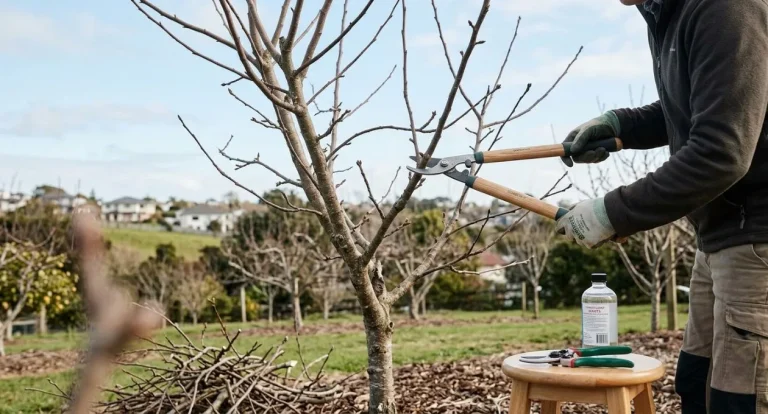
It’s also possible that while the tree has overgrown faster than you could imagine, all it may need is some pruning. Depending on the situation, a certified arborist auckland can tell this after assessing your tree and recommend the best plan while keeping you safe from potential injuries and a hefty fine from the authorities.
Get Professional Tree Removal in Auckland
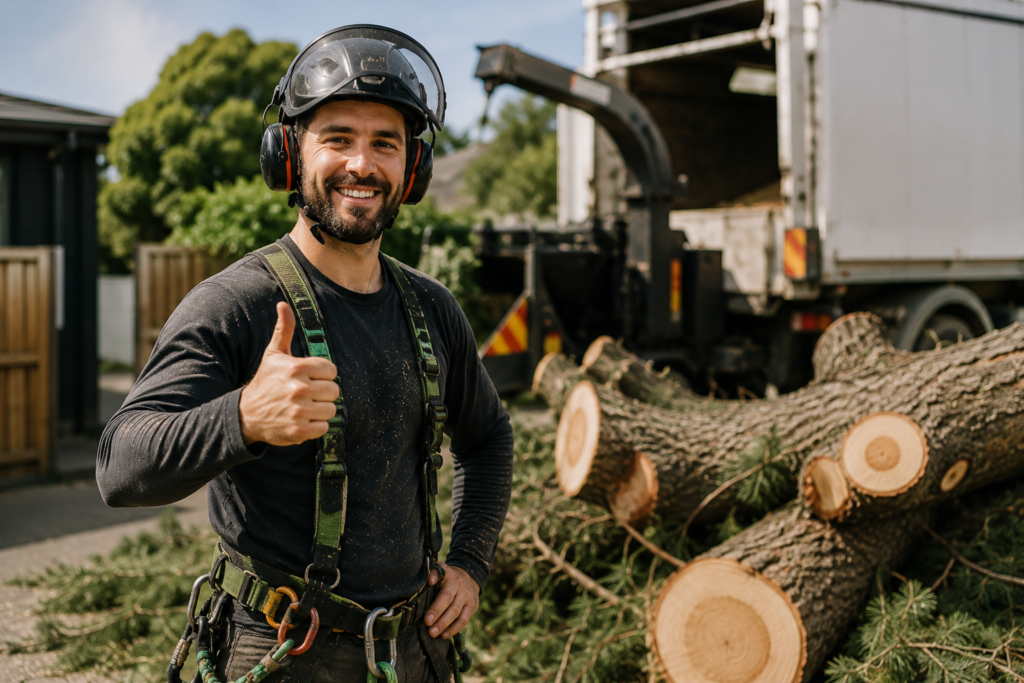
It doesn’t take long for a valuable tree to become a risky liability, waiting to cause harm to you or your neighbours. And sometimes, removal is the only viable option so you can resume your life without safety hazards and space constraints.
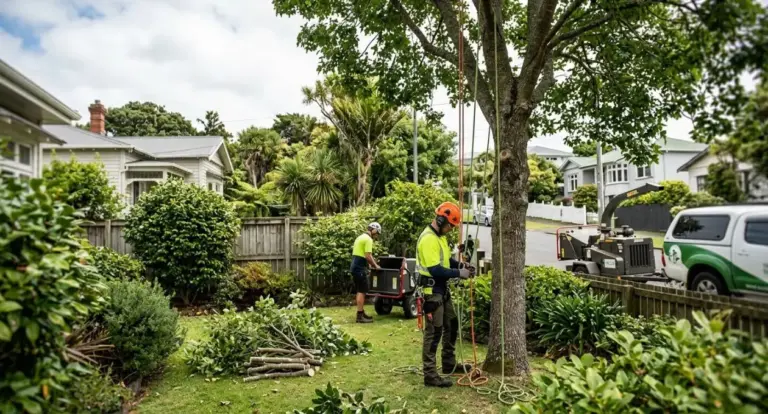
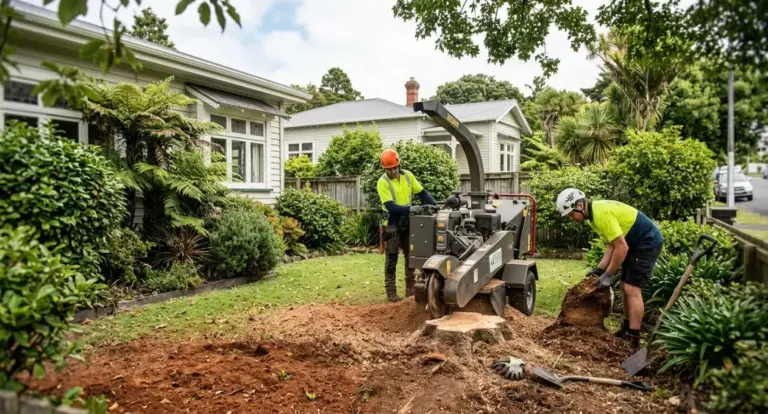
That’s why we’re here to help you with safe, clean, and reliable tree removal auckland. Led by Kes, a Level-4 Arborist with a decade-long experience in handling difficult trees, our team helps you with safe tree removal. We’re fully insured and any damage to your property is covered during the tree removal process.
With safety and precision on our minds, we always see to it that the tree removal process isn’t disruptive and is always structured to give you one less thing to worry about.
Have a tree that’s causing you trouble? Call us for a free on-site assessment, and we’ll help you out with the next steps and an upfront price.