Diameter at ground level
Measured across the widest point of the stump, not the trunk above it. The flare at the base is usually wider than people estimate.
Stump Removal
Three ways to get rid of a stump, and they are not equally good. Here is the honest comparison — then the method we use, and why it suits almost every Auckland section.
Compare Methods
There are three ways to deal with a stump. We use one of them for almost every job, and we will tell you plainly when yours is the exception.
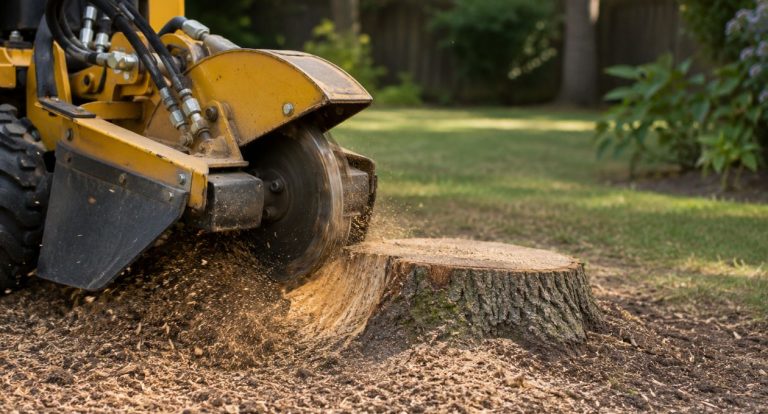
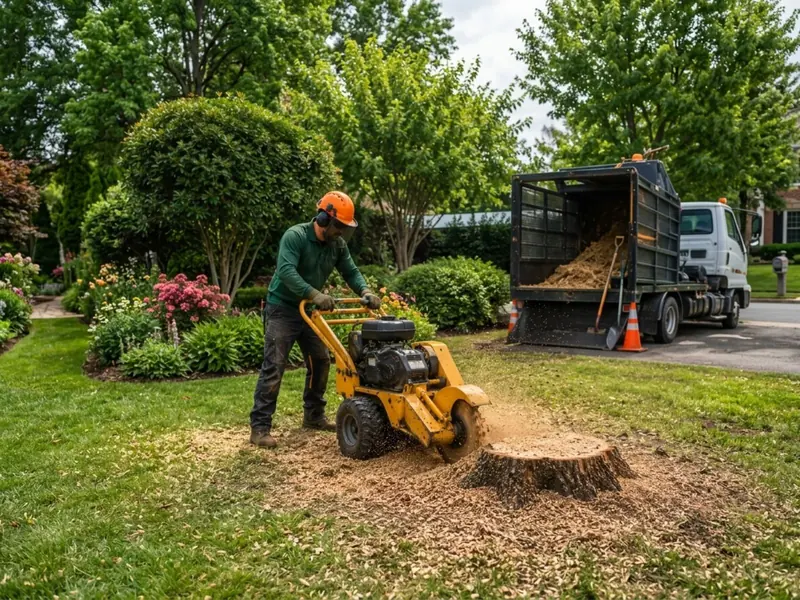
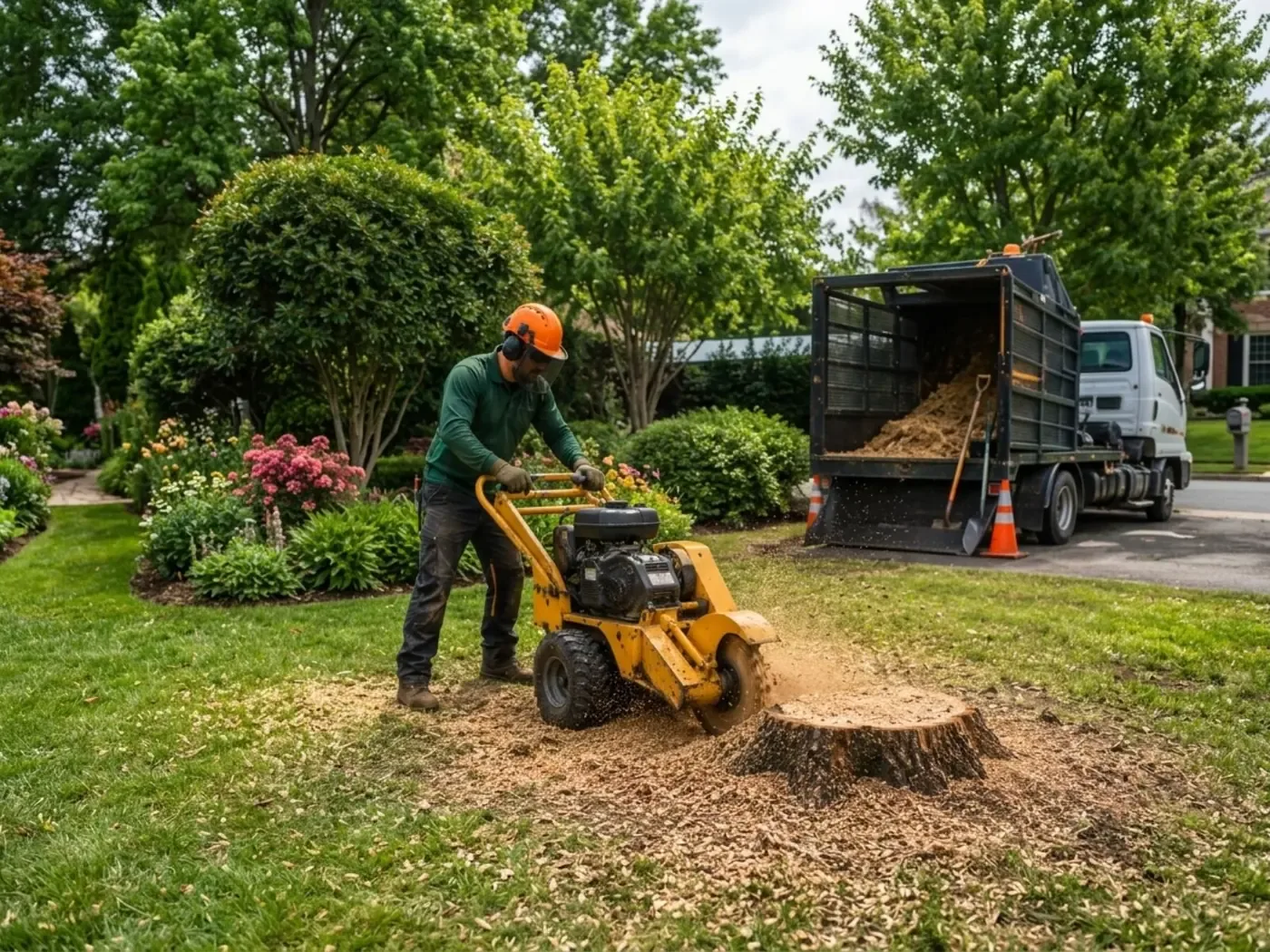
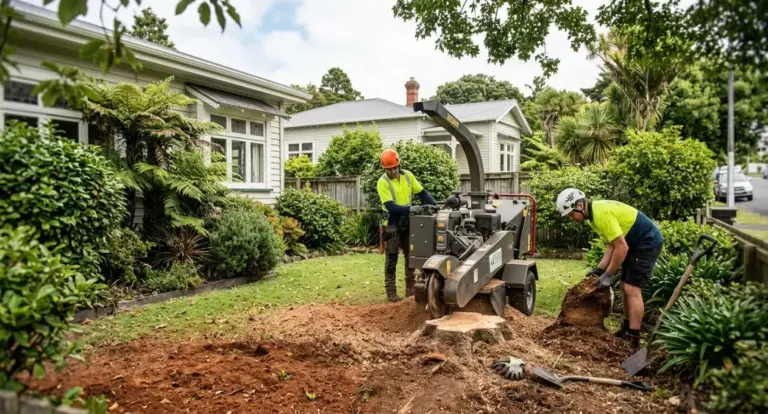
A cutting wheel chews the stump and surface roots into chip, below ground level. Fast, usually a couple of hours, and it barely marks the surrounding lawn. Works in tight spaces a machine could never reach. This handles the overwhelming majority of Auckland stumps.
A digger lifts the stump and root plate out whole. It leaves a large hole to backfill and needs machine access, so it tears up far more of the section. We only recommend it when foundations, paving or a driveway are going over the top and the roots genuinely cannot stay.
Sold as the cheap option. It is a stump-rotting compound that takes one to three years, does not reliably kill the root system, leaves the stump in place the whole time, and puts chemicals into soil you may want to plant in. We will not recommend it and we would rather you knew why.
Grinding Depth
Grinding depth is a real cost variable, and most quotes never mention it. Deeper takes longer and produces more chip — so it is worth matching the depth to the plan, not paying for depth you will never use.
Enough to get below the root crown so you can spread topsoil, seed or lay turf and mow over it without ever finding it again.
A new tree needs actual root room. This depth also means removing the grindings rather than backfilling with them, because chip robs nitrogen from the soil as it breaks down.
Anything structural going over the top means the roots come out entirely. Grindings and decaying roots settle over the following years, and settlement under paving cracks it.
The stump is only the visible part. Major surface roots running out from it get ground too, otherwise you are left with ridges through the new lawn.
Irrigation, power, gas, fibre and drainage all run shallower than people expect. We locate before the wheel goes in — a grinder does not stop for a cable.
Backfilling with the grindings is free and fine under lawn. Removing it and bringing in clean topsoil costs more, and is the right call before replanting.
Depth is the one thing worth deciding before we quote. Grinding for a lawn and grinding for a new tree are genuinely different jobs, and paying for 400mm when you are going to turf over it is money you did not need to spend. Tell us the plan at the assessment and we will grind to suit it.
What Drives the Price
Stumps are priced on diameter, access and depth. These are the factors that move it.
Measured across the widest point of the stump, not the trunk above it. The flare at the base is usually wider than people estimate.
Our narrow-access grinder fits through a standard gate. A stump behind a retaining wall, up steps or in a courtyard takes longer to reach and set up.
Turf depth and replanting depth are different jobs. Deeper means more time on the wheel and more chip to deal with.
Hardwoods such as pohutukawa, oak and gum grind more slowly than pine or a palm trunk. Grit in the bark of a paddock stump blunts teeth fast.
A row of stumps in one visit is far cheaper per stump than the same stumps across separate callouts. Do them together if you can.
Where cables or irrigation run close, we work slower and more carefully, and sometimes hand-dig the first section.
What Auckland property owners ask before booking stump work.
Stump removal is the outcome; grinding is the usual method of achieving it. Grinding uses a cutting wheel to reduce the stump and surface roots to chip below ground level, leaving the deeper roots to decay naturally. Full removal by excavation lifts the entire stump and root plate out with a digger. Grinding suits almost every domestic situation; excavation is for when something structural is going over the top.
You can, but it takes years, and in the meantime it is a trip hazard, a mowing obstacle, and a reliable host for honey fungus and wood-boring insects that can move to other plants. Stumps of species such as privet, willow and some eucalypts will also reshoot repeatedly from the stump and roots.
No. Stump-rotting compounds take one to three years, do not reliably kill the root system, and leave residues in soil you may want to plant into. Grinding gets the same result in an afternoon, so we would rather do that and tell you honestly why the cheap-looking option usually is not.
Typically 150 to 200mm below ground for turf, and 300 to 400mm where you intend to replant. See the depth guide above — it is worth deciding before we quote, because the depth genuinely changes the price.
Your choice. We can backfill the hole with the grindings, which is free and fine under lawn, or remove the chip and bring in clean topsoil. If you plan to replant in the same spot, take the chip away — it draws nitrogen out of the soil as it decomposes and new plants suffer for it.
Usually. Our narrow-access grinder fits through a standard 900mm gate, which covers most Auckland back sections. Stumps behind retaining walls, up flights of steps, or in enclosed courtyards are still doable but take longer to set up, and we will say so at the assessment rather than on the day.
Free, No-Obligation
Send us the diameter across the base, roughly where it sits, and what you want to do with the space afterwards. We will quote in writing — free, with the grinding depth matched to the plan rather than guessed.
Most stumps are a two-hour job with the right machine. The part worth getting right is the depth — which depends entirely on whether you are laying turf, planting a tree, or putting paving over the top.
Turfing, planting, or paving over it?
Get My Free QuoteFree on-site assessment across East, South and West Auckland.