Auckland’s usually retains the root system for longer than anticipated. It’s possible for a stump which seems lifeless to remain attached via roots that have not yet released their grip; hence, it is often the reason why many do-it-yourself efforts to uproot stumps fail half-way.
Certain types of trees such as privet and plane trees can regrow from stumps when left untouched, in as short a period as a few weeks.
This article will take you through the process involved in each method and how they are affected in the case of Auckland.
Would you rather have it done for you? See our stump removal in Auckland — free on-site quote from certified, fully insured arborists.
Free, no-obligation
Still Got the Stump?
Ground out below ground level so the space is ready to turf, pave or replant — not left to regrow.
Why the Right Method Depends on the Stump
Not every stump is the same job. Young privet stumps with shallow root systems may require a different approach from an old oak stump with its roots spread out over a distance. It all comes down to size, species, and spread of roots.
Small stumps of young trees can be handled without heavy machinery. Large stumps of old trees are better handled by grinding machines or professionals. The species of tree also matter since there are some trees that have invasive root systems that continue spreading long after the stump itself disappears.
Physically Removing the Stump
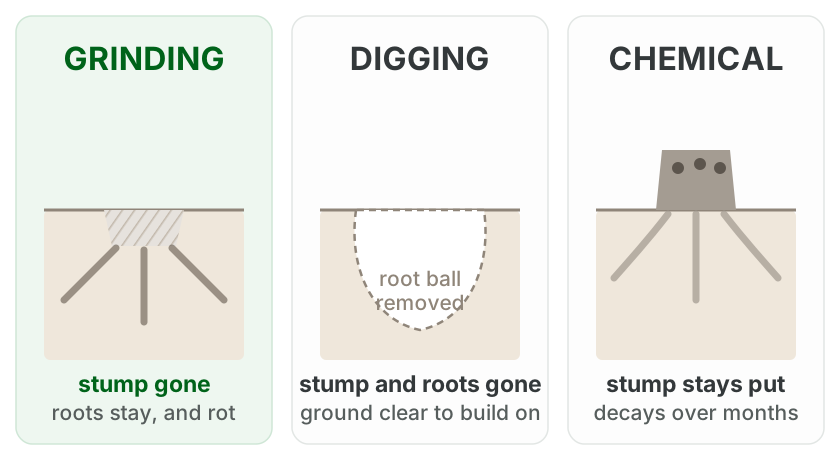
If the objective is to remove the stump from the soil entirely, then there are two methods available: grinding and digging. Each process produces a final product that is unique to its method, so the choice will depend on what is going to happen with that particular space.
Grinding
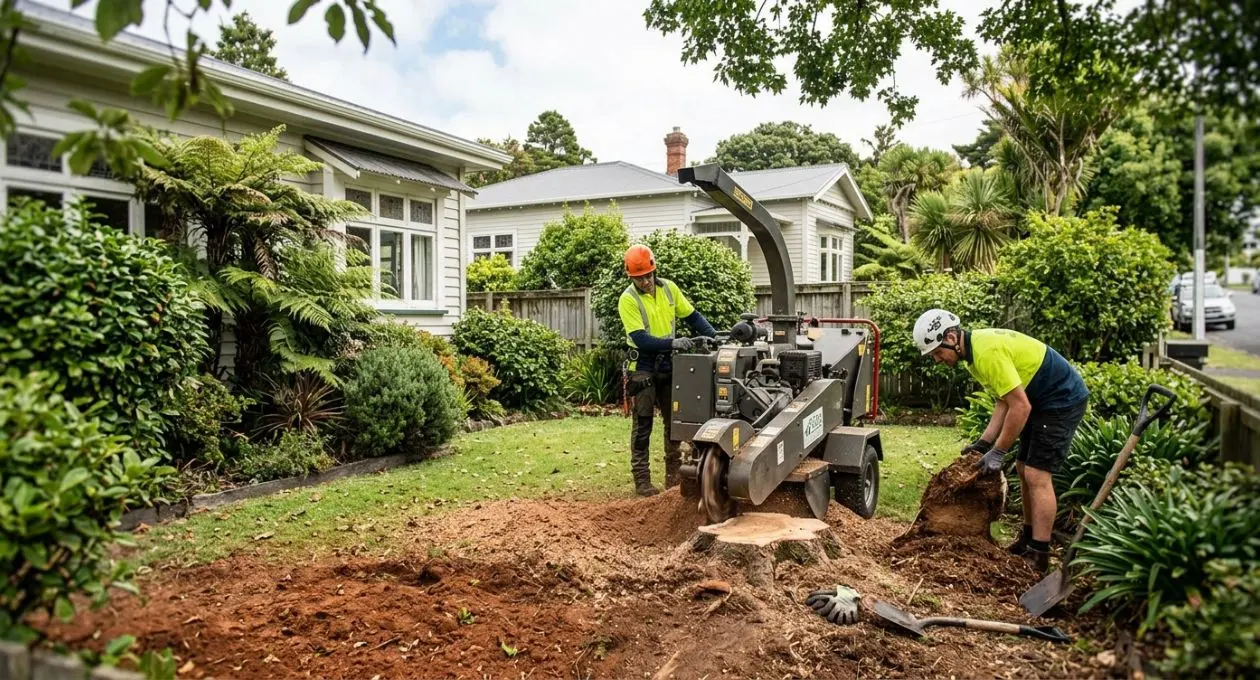
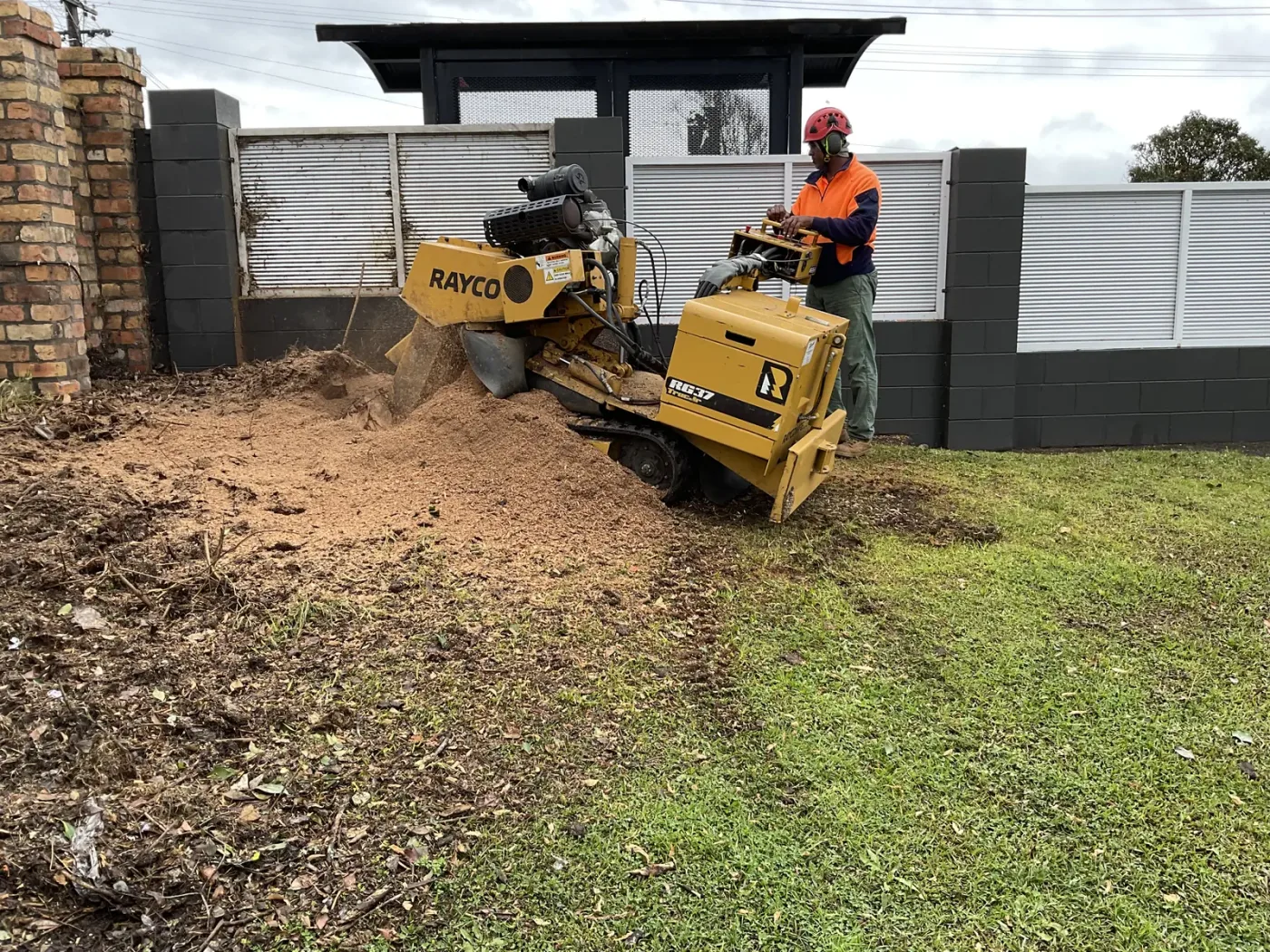
Stump grinding is considered the most common procedure in Auckland. A stump grinder will grind the tree stump until it is below the ground surface, leaving wood mulch and dirt in place of the old stump. The roots remain in the ground, rotting away after some years.
This is obviously the faster method and the cheaper one. This is an ideal method if you want to install grass or garden in the place of the old stump because you do not need the roots to disappear, only the visible stump.
The cost of Tree Stump Grinding in Auckland depends on the diameter of the stump.
Digging Out
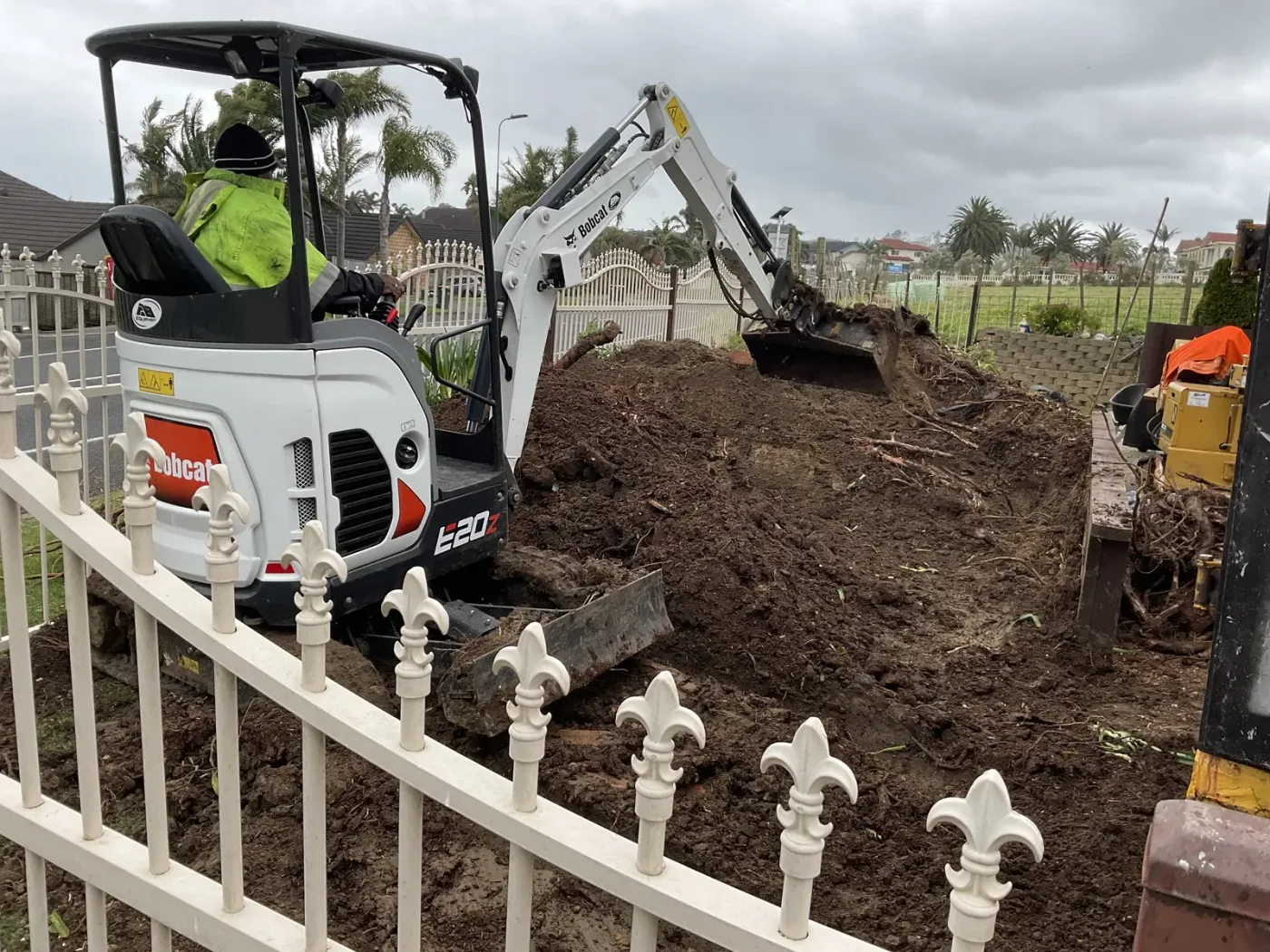
Stump excavation entails excavating not just the wooden trunk but also the root ball attached to it. This is required whenever one wants the ground completely clean for various purposes such as the creation of driveways, the laying of foundations, or construction processes that require the ground to be free of roots underground.
Stump excavation is difficult in the Auckland environment. Clay soil tends to compact itself around the roots making them hard to dig out. In addition, large root systems may extend way past the visible stump, hence requiring extra time and effort to dig.
Free, no-obligation
Still Got the Stump?
Ground out below ground level so the space is ready to turf, pave or replant — not left to regrow.
Killing the Stump Instead of Removing It
Unlike grinding or digging, chemical treatment is not an alternative technique but a different approach altogether. You don’t physically remove the stump; you simply kill it so that it decays naturally over time.
The stump killers, which are mostly potassium nitrate based products, can be purchased from NZ garden centers or hardware stores. The technique involves boring holes in the stump, injecting the stump killers and then waiting for the process to run its course – it’s not going to happen overnight. In practical terms, you will require a few weeks or even months until the stump breaks down sufficiently enough for easy removal.
This solution is useful when you have no immediate need to remove the stump and you don’t want to incur the expenses involved in grinding or digging.
What if Auckland Council Intervenes
It is not allowed to burn the stump at the property site in most Auckland suburbs. First, open burning is prohibited by the council guidelines, and secondly, stumps do not burn well because they are likely to smolder instead of burning away, especially if there is moisture in the wood due to the climate in Auckland. If you intend to go for this method, you should look into the latest regulations by Auckland Council, as there might be fines for burning your green waste.
Regrowth Is the Real Risk, Not the Stump Itself
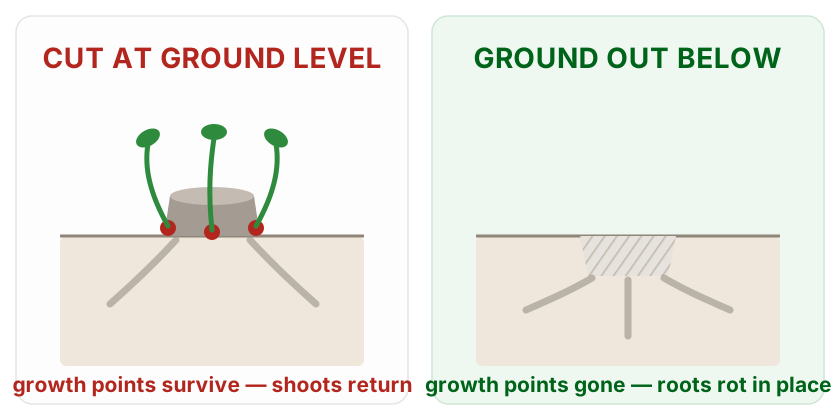
The problem lies not in the stump itself because the main concern comes from what regrows from that stump. Privet, plane trees, and willows are some examples of tree species that are notorious for being able to grow new shoots when stumps are cut from them.
This is the reason why it is important to either kill the root system completely or remove it. Grinding destroys the growth point of the stump but doesn’t do anything about the roots that are left buried in the ground. In most cases, that is enough to prevent regrowth, and only in certain cases does it become necessary to use chemicals or dig.
What to Do After the Stump’s Gone
The site will require filling in with soil once the stump has been either removed or ground. This can be done using wood chips and loose soil left over from grinding, along with garden soil to fill in the gap and make everything even.
Once this is done, it will depend on what you are planning to do with the area in terms of either reseeding grass, planting a different kind of plant, or expanding your garden bed. It may be worth considering removing any wood residue left behind by the wood chips.
Need expert hands on your site and want that stump gone? Our team of arborists in Auckland can help you with the same. Book a free on-site inspection and get an accurate analysis of your stump’s state and what can be done to manage it effectively.