The removal of a small tree in an open yard can be done in about one hour, while that of a big tree right next to a fence line or power line might take more than one day. There is no standard time required for tree removal in Auckland, but there are several factors affecting the time, which remain consistent. Once you are aware of those factors, it becomes easy to estimate the time required for a particular task.
Size, Access, and Permit Decide the Timeline
Would you rather have it done for you? See our tree removal in Auckland — free on-site quote from certified, fully insured arborists.
Free, no-obligation
Need Professional Tree Removal?
We assess the tree on site, quote in writing, and take care of consent checks before anything is cut.
Three main factors have a great influence on the length of time required to remove a tree: The size of the tree and its condition, accessibility of machinery to the tree, and requirement of council approval prior to any trimming. Other factors, such as weather, location close to buildings, number of trees, and others affect the schedule marginally.
Bigger and Unhealthier Trees Take Longer
Small trees, especially ornamental or younger trees that are around 5 metres tall, can be uprooted in less than an hour after commencement of the job. Medium suburban trees take several hours. Big, old trees, especially those with broad canopy, may take most of the day or more, especially when they have to be taken down in pieces and not one whole.
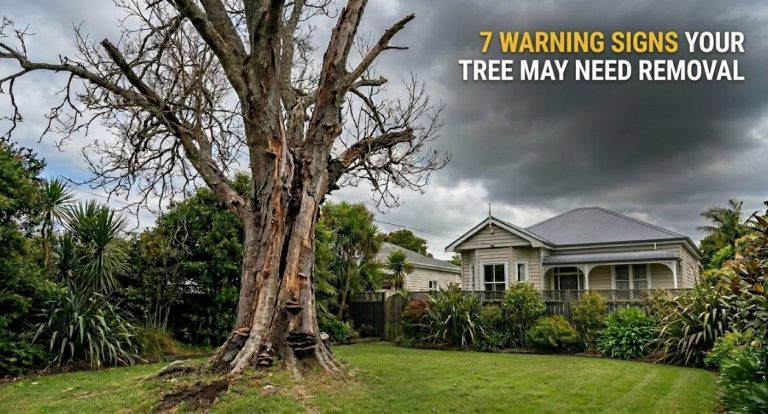
Dead or diseased trees always bring in some degree of uncertainty irrespective of size. Weak branches and unsteady trunks necessitate careful working by the crew, inspecting for structural safety before cutting. Dead trees that appear simple on the ground could take longer than healthy trees of twice their size.
Hard to Access Trees Are Difficult
A tree standing in the middle of an open yard or in front of a driveway gives the crew access to bring in equipment, and allows for a relatively straight-forward tree removal process. The tree that is back in a narrow alley way, trapped between buildings, or that doesn’t have any vehicle access at all alters the entire process.
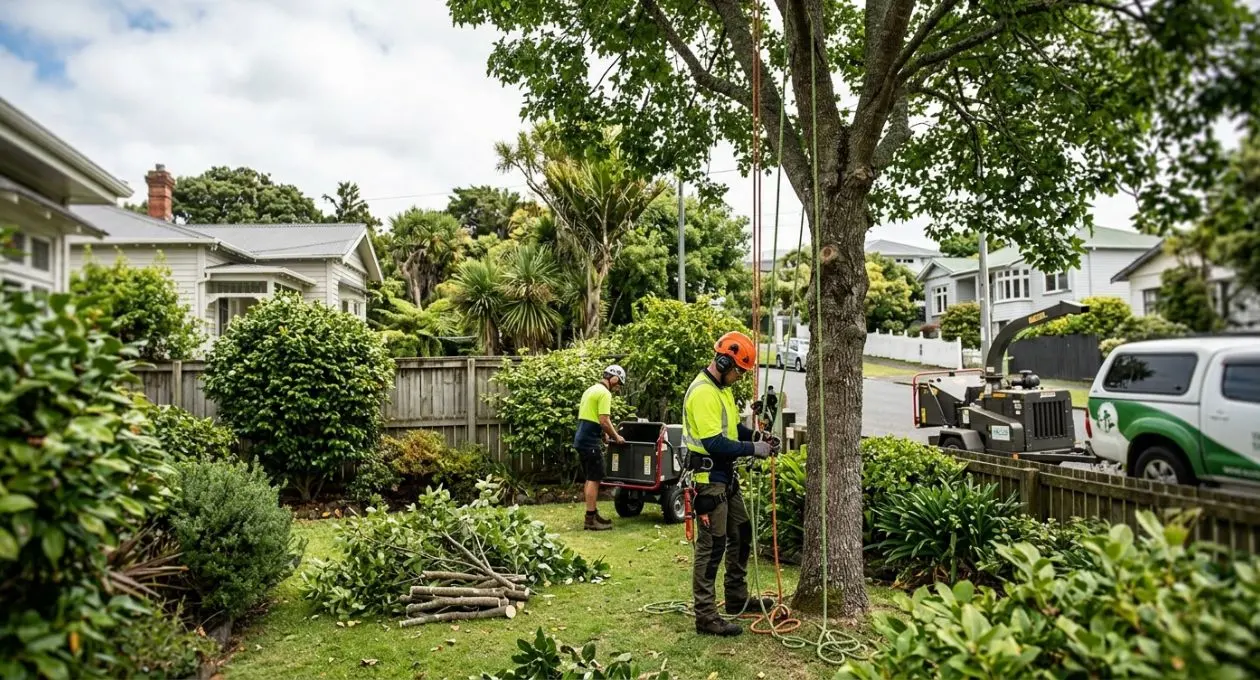
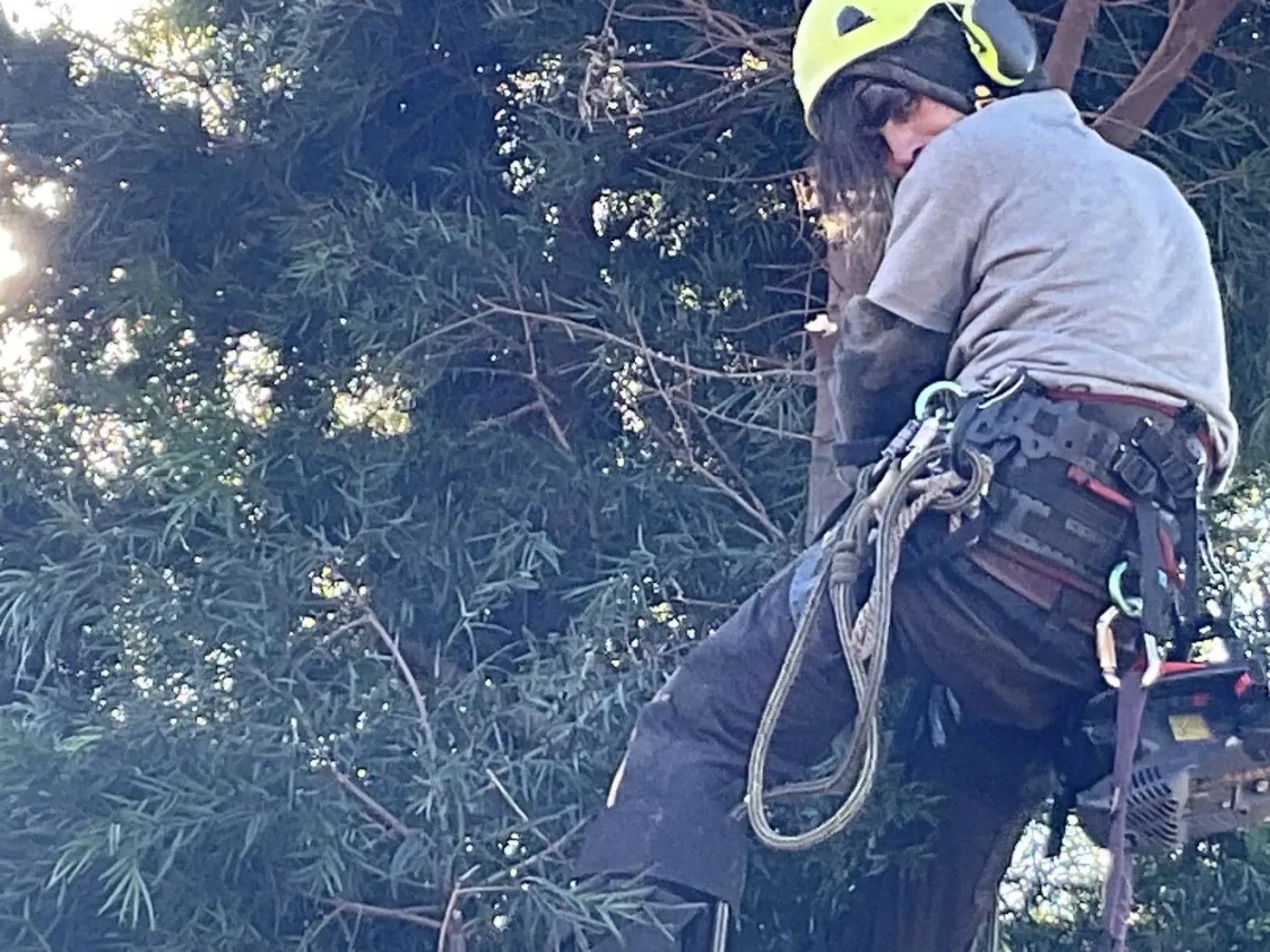
A low access situation normally means climbing the tree and dismantling it bit by bit, removing it from the top down using rigging. It is simply a different process by its very nature. Each bit must be cut off, secured, lowered and removed before the next bit can be taken down.
The Paperwork Can Take Longer Than the Cut
This is not an issue with ordinary trees. Normal trees that do not belong to any protected species would not need council consent for their removal. If the tree belongs to the notable trees of Auckland Council, however, its removal can take only one hour while obtaining permission to remove it can take several weeks.
The process of seeking resource consent from the council depends on the tree and the reason for its removal. It is important to establish whether resource consent is required before removing the tree because the process can be long and time-consuming.
Wind, Power Lines, and Fences Slow Down the Day
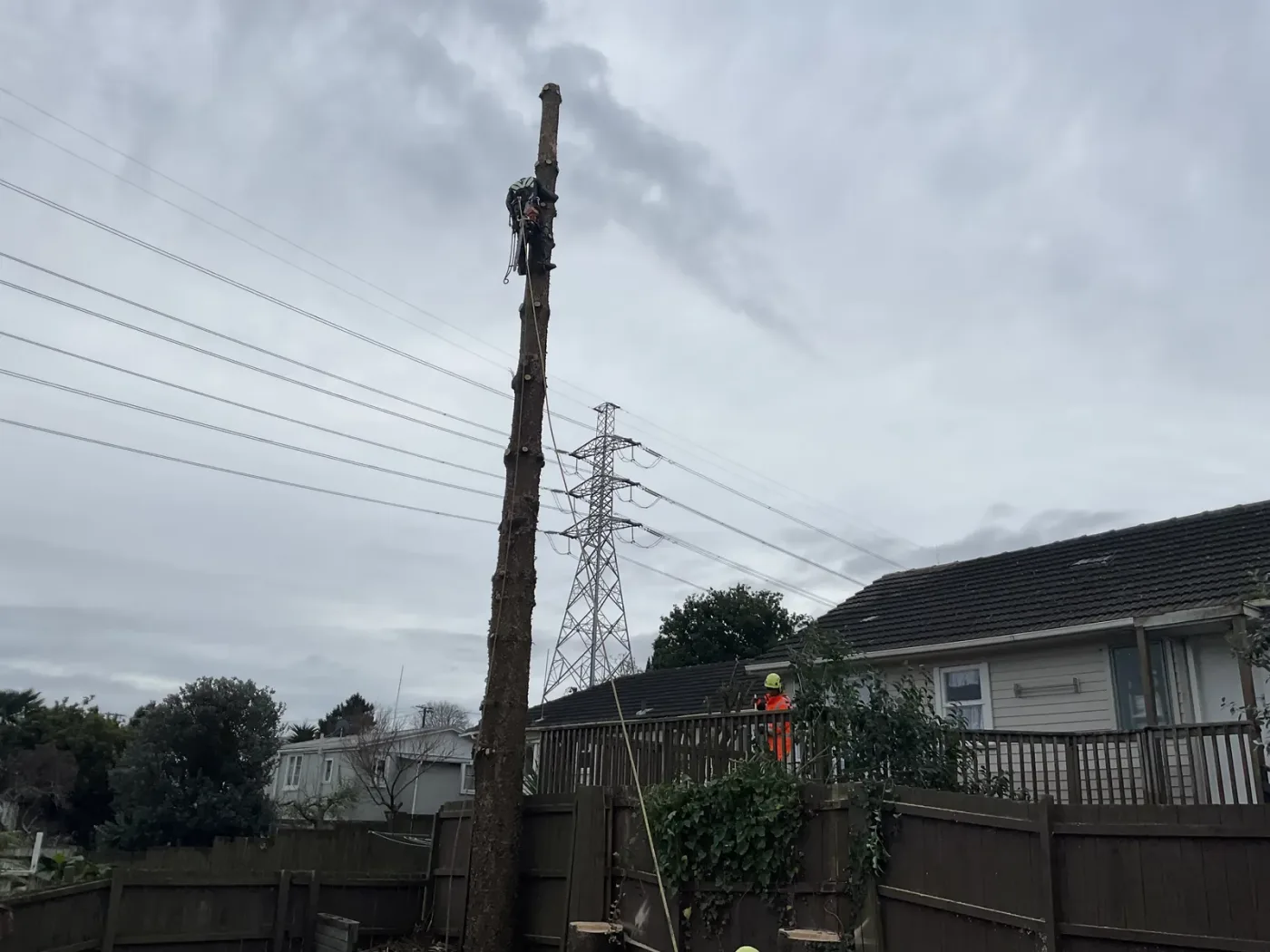
There are a few scenarios where timelines tend to be extended on the actual day. These include wind and rain, which often occur in Auckland, delaying and sometimes stopping work, especially when it comes to any tasks that involve climbing or working at heights. Trees near power lines, fences, or any other buildings take more time to cut because of the danger of damaging them than an ordinary tree with open space around it to fall down in.
In cases of removal of several trees on one day, timelines increase in proportion to each individual task.
Free, no-obligation
Need Professional Tree Removal?
We assess the tree on site, quote in writing, and take care of consent checks before anything is cut.
Realistic Timeframes by Tree Size
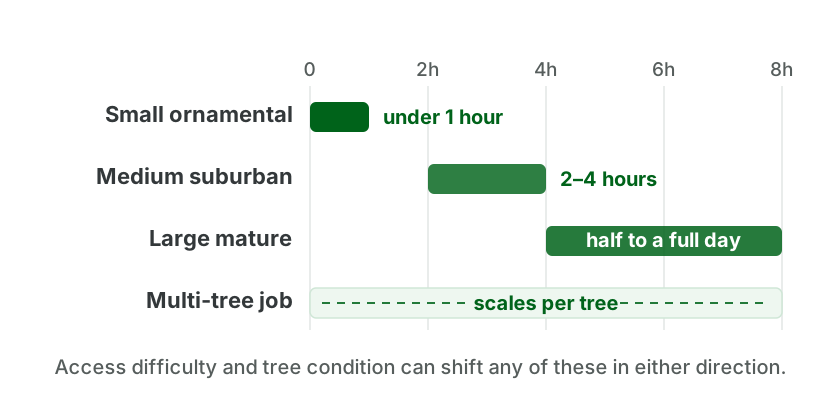
As a rough guide:
- Small ornamental trees: under an hour once work begins
- Medium suburban trees: roughly 2–4 hours
- Large mature trees: half a day to a full day, depending on access and canopy size
- Multi-tree jobs: scales per tree, with some time saved from equipment already being on site
These are general ranges — access difficulty or tree condition can shift any of them significantly in either direction.
The Job’s Not Done When the Tree’s Down
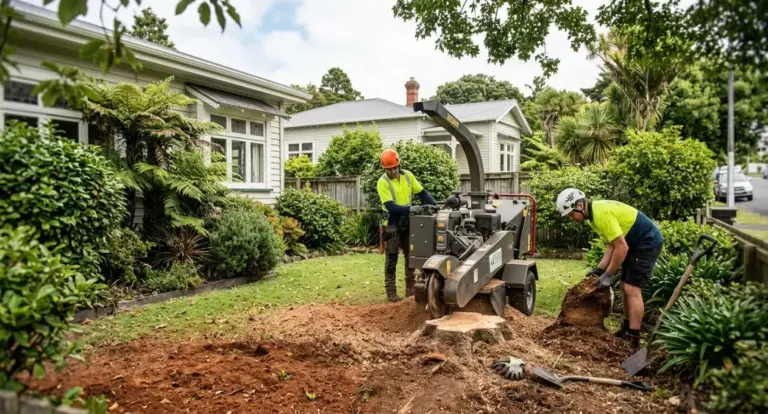
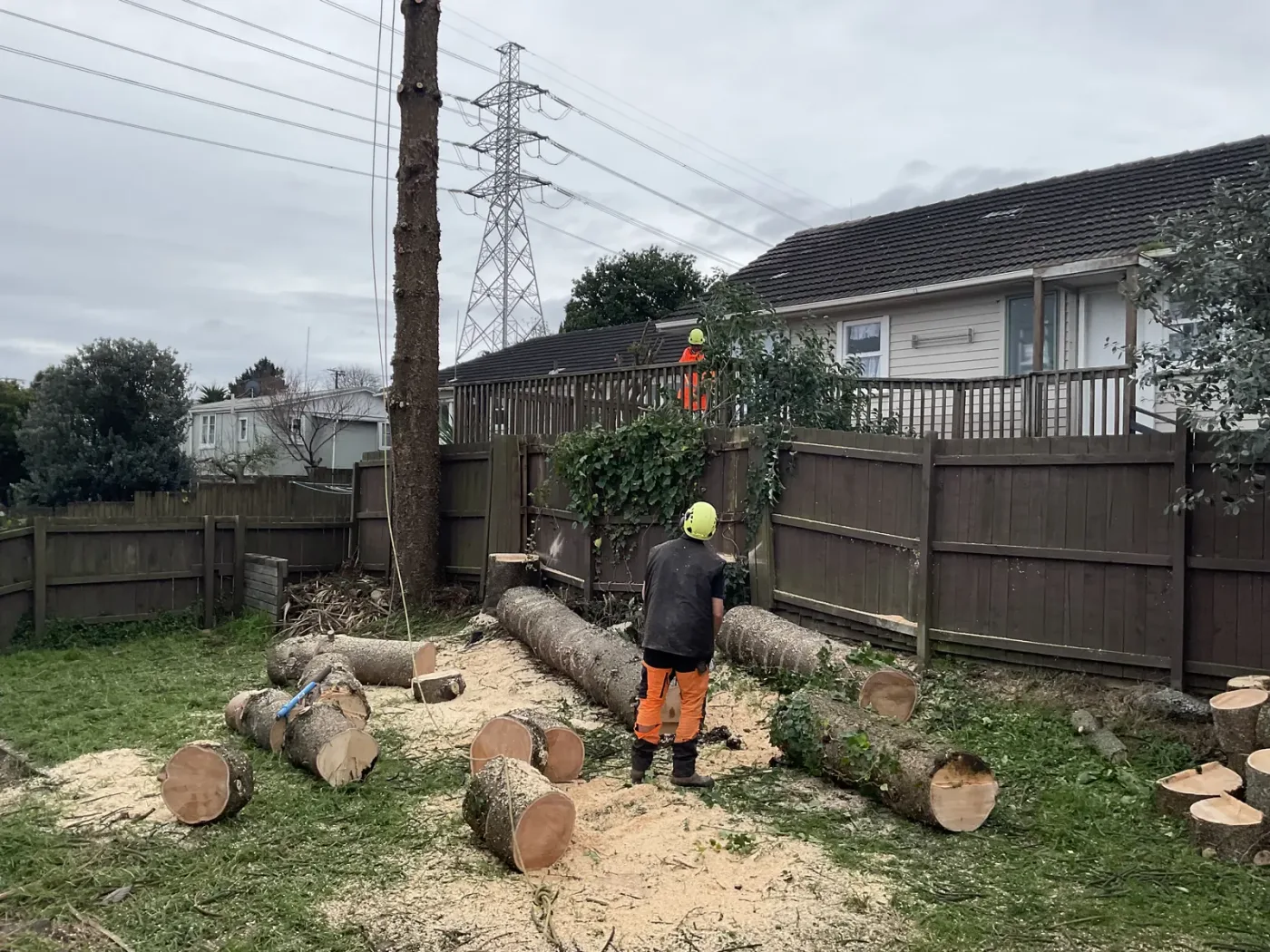
Felling the tree doesn’t mean the process is complete. After it’s been cut down, clearing branches, debris, wood disposal, or processing, may need to be done.
It may not be certain whether the process of removing the stump will occur during the same visit, considering that such service may be quoted differently from tree removal services.
So, it’s worth checking if the timeline quoted would match the entire scope of work.
Get an Accurate Timeline From an Expert Arborist in Auckland
Planning is one thing, however, planning without knowing about access, tree health, and consent status is another. There must be an inspection done on site in order to have a proper timeline. An arborist Auckland can inspect the job on site or using photographs to give you an exact quotation, instead of a general quote – and also tell you early on whether or not consent will be required.
Got a tree that needs to come down? Get in touch with us for a free onsite assessment and a clear timeline before you plan around it.