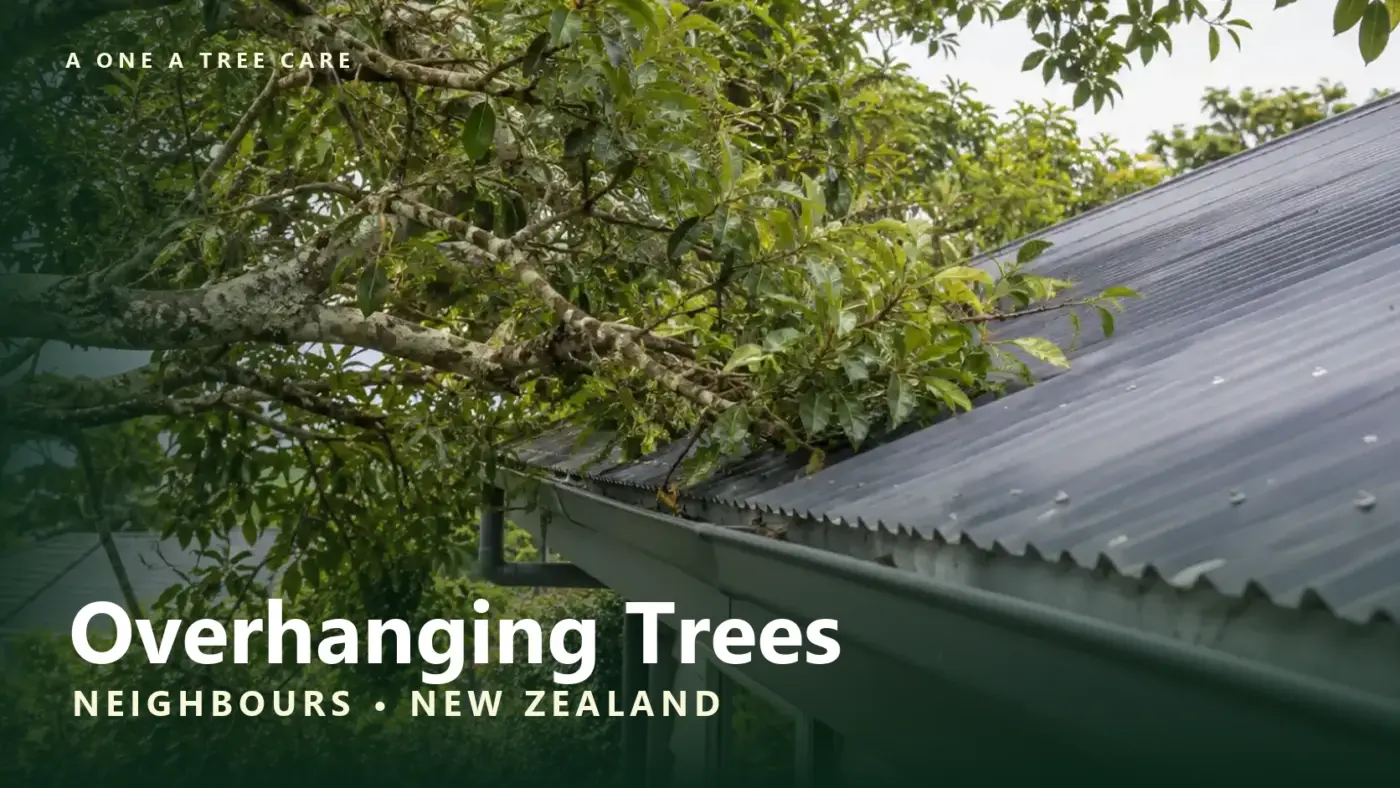
Branches over the fence, leaves in the gutter, a trunk slowly lifting the driveway. It is one of the most common reasons people call an arborist, and it is the one where acting first and asking later causes the most damage, to the tree, to the relationship, and occasionally to a wallet.
Here is the sensible order to do things in.
Would you rather have it done for you? See our tree pruning in Auckland — free on-site quote from certified, fully insured arborists.
Qualified arborists
Want It Pruned Properly?
Correct cuts, the right season, and the full clean-up included — without taking more off the tree than it needs.
Start With the Conversation, Not the Saw
This sounds like soft advice and it is the single most practical thing on this page.
Most overhanging-branch situations are resolved by a neighbour who did not realise there was a problem. Many are not resolved by anything else without cost. Once someone has cut into a tree their neighbour cares about, the dispute is no longer about branches.
Go with something specific. “Your tree is annoying me” invites an argument. “The branches over the carport are dropping sap on the car and I’d like to get them taken back to the boundary, happy to arrange it and pay for it” invites a yes.
Work Out Whose Tree It Actually Is
The owner is the person whose land the trunk stands on, not whose side the branches hang over. If the trunk straddles the boundary it can be shared, which changes the conversation considerably.
If the boundary itself is uncertain, and a fence built in the wrong place years ago is extremely common, that is worth establishing before anything else. A surveyor costs less than a dispute.
Check Whether the Tree Is Protected
This is the step people skip, and it is the one that turns an annoyance into a problem.
A tree in Auckland can be scheduled, sit under a planning overlay, or carry a condition from an earlier resource consent. If it is protected, that applies to significant pruning and root cutting too, not just removal, and it applies regardless of which side of the fence you are standing on. Our guide to council consent for tree removal in Auckland walks through the property lookups.
“I Can Cut What Hangs Over” Has Limits
There are longstanding principles about branches that cross a boundary, and most people have heard a simplified version of them. The simplified version is where the trouble starts.
- Anything you remove is generally still the tree owner’s property. Tipping it over the fence is not the gesture it feels like.
- Cutting back hard at the boundary line can destabilise a tree or leave it lopsided. If the tree later fails, the question of who caused that is not one you want to be answering.
- Protection status overrides the general position entirely.
- Roots are treated seriously. Severing structural roots can kill a tree that stays standing for another two years before anyone notices.
If the situation is genuinely contested rather than just awkward, that is the point to get legal advice rather than a chainsaw. This page is written by arborists, not lawyers.
Get It Assessed Properly
An assessment is useful here for a reason that has nothing to do with selling the work. It converts “that tree is a problem” into a specific, describable job, and that is what makes the neighbour conversation easy.
A good assessment should tell you whose tree it is and whether the status has been checked, what can be done without harming the tree, what the work would involve and cost, and whether the concern is cosmetic, a maintenance nuisance or a genuine risk.
Those answers resolve most of these situations. A neighbour who refuses “cut your tree” will often agree to “a qualified arborist takes the three branches over the carport back to the boundary, we pay, the tree is fine”. That is usually a tree pruning job rather than a removal.
Qualified arborists
Want It Pruned Properly?
Correct cuts, the right season, and the full clean-up included — without taking more off the tree than it needs.
When It Is Actually a Hazard
Different situation, different urgency. A tree that is visibly failing, has split, or is leaning onto a building after a storm is a safety matter rather than a boundary disagreement.
Document it with dated photographs, tell the neighbour, and get it looked at. If it is an immediate danger to people, that is not the moment to be sorting out who owns which branch, and our emergency tree services operate around the clock.
Get an Assessment
We assess the tree, confirm its status, and give you something specific to take to the neighbour. If removal turns out to be the right answer, our tree removal in Auckland quotes set out exactly what is included.
Qualified arborists
Want It Pruned Properly?
Correct cuts, the right season, and the full clean-up included — without taking more off the tree than it needs.
Frequently Asked Questions
Can I cut branches that hang over my side?
There are established principles that allow it in general terms, but they come with real limits. The cuttings remain the owner’s property, the work must not damage the tree, and protection status overrides everything. Check the tree’s status first.
Do I have to give the branches back?
Material removed from a tree generally remains the tree owner’s property. Returning it by throwing it over the fence is a reliable way to turn a solvable problem into a dispute.
Who pays?
Whoever wants the work usually arranges and pays for it. Offering to pay is often what makes the neighbour agree, and it is cheaper than the alternative.
What if my neighbour refuses?
Get the tree assessed so you know whether the concern is cosmetic or a genuine risk, and take that to them. If it is genuinely contested, seek legal advice. An arborist can tell you about the tree; they cannot resolve a legal dispute.
What about roots lifting my driveway?
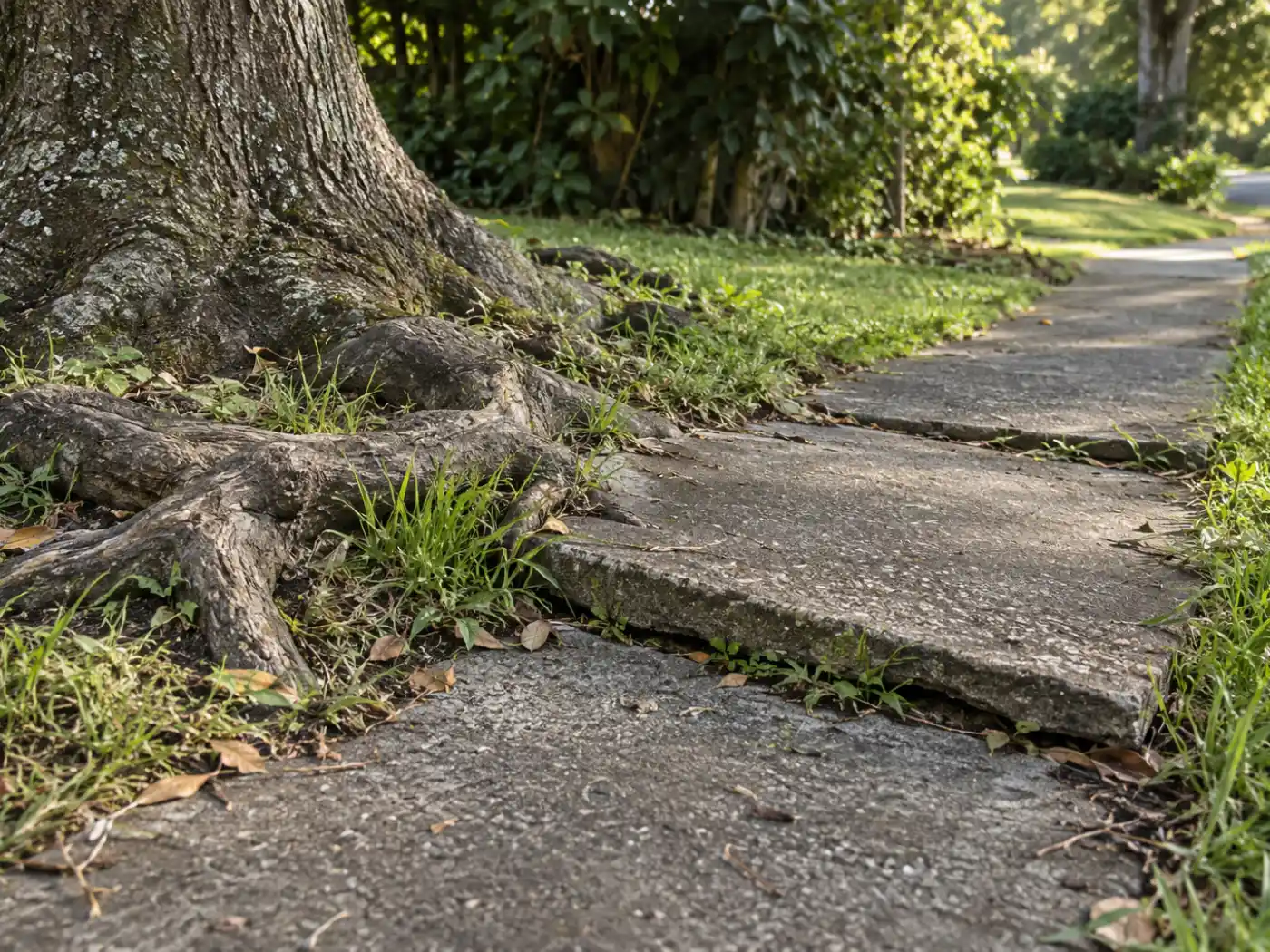
Roots are treated as seriously as branches, and cutting structural roots can kill a tree or make it unstable. Have it assessed before anything is cut. This is the situation where do-it-yourself does the most hidden damage.
The tree is on council land. Who do I talk to?
The council. Street and berm trees are council assets, and work on them is arranged through the council rather than privately.